2026-11-29
Sangnoksu Orthopedic Clinic: Knee Osteoarthritis Stages, Symptoms, and Treatment Options
Explains the early, middle, and late stages of knee osteoarthritis, non-surgical treatment options, and when surgery should be considered, from Sangnoksu Orthopedic Clinic.
Sangnoksu Orthopedic Clinic: Knee Osteoarthritis Stages, Symptoms, and Treatment Options
Hello.
This is Ansan Ace Hospital, where 20 medical professionals work together to provide care.
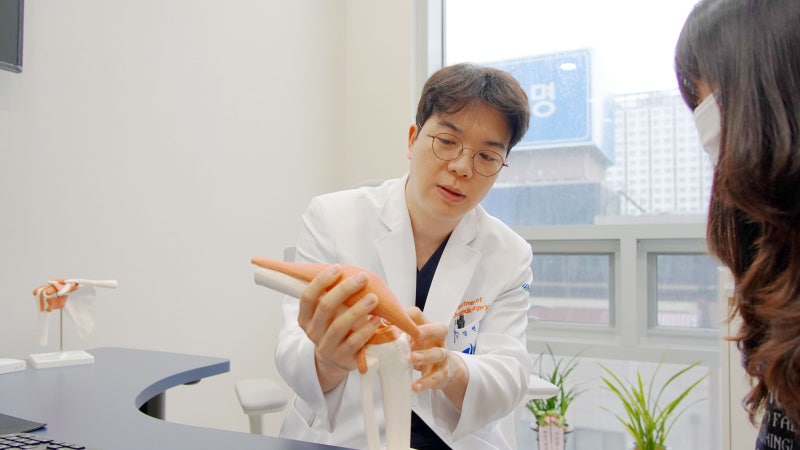
"I was told I need a joint replacement." "I'm not ready to do that yet."
Patients who are advised to undergo joint replacement surgery and then visit Sangnoksu Orthopedic Clinic often wonder whether there are other treatment options.
Before surgery, we check whether there are treatments that can be tried at the current stage of arthritis. To determine the direction of treatment, we need to look at how much cartilage remains and how much discomfort the patient feels in daily life.
Let's look at treatment by arthritis stage and the timing of surgery.
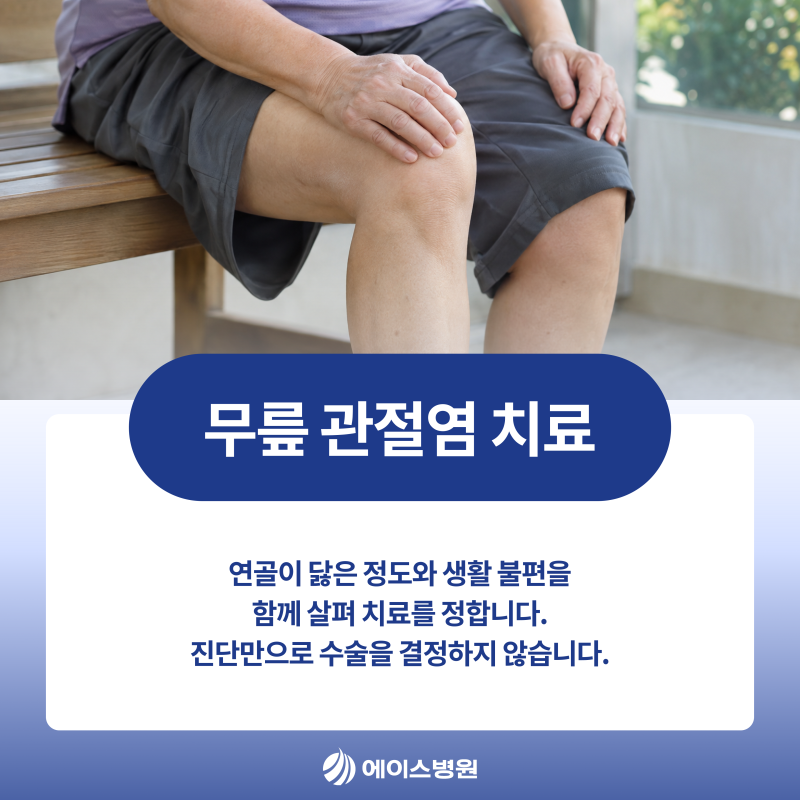
How do knee osteoarthritis stages differ?
Knee osteoarthritis is divided into early, middle, and late stages based on how much the cartilage has worn down.
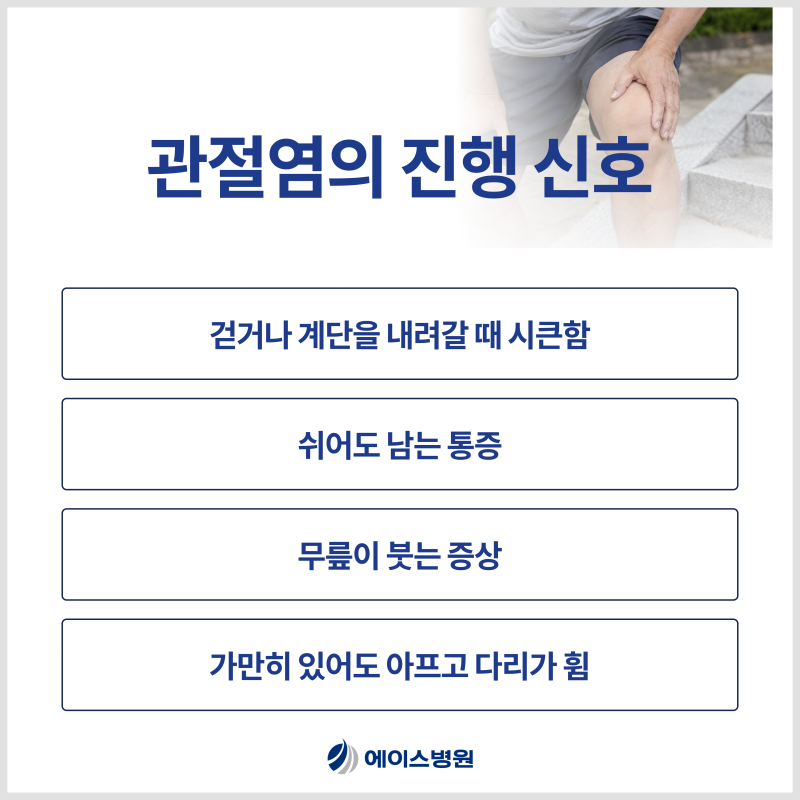
· Early stage
The knee feels achy when walking for a long time or going down stairs, but the pain subsides with rest.
· Middle stage
Pain persists even at rest, and the knee may swell.
· Late stage
Pain occurs even when still, and the legs begin to bow.
Symptoms at each stage are important clues for deciding the direction of treatment.
However, even when X-ray findings look similar, the discomfort people feel in daily life can differ. For that reason, we also check how far a patient can walk and whether pain wakes them up at night. This is because the joint space visible on X-ray does not always match the actual level of discomfort.
Even if the cartilage appears heavily worn, pain may be milder when the surrounding muscles provide good support, and the reverse can also be true. That is why we do not decide treatment based on the stage shown on imaging alone.
For patients who visit Sangnoksu Orthopedic Clinic, Ansan Ace Hospital looks at not only how severe the pain is but also the difficulties patients face in everyday life.
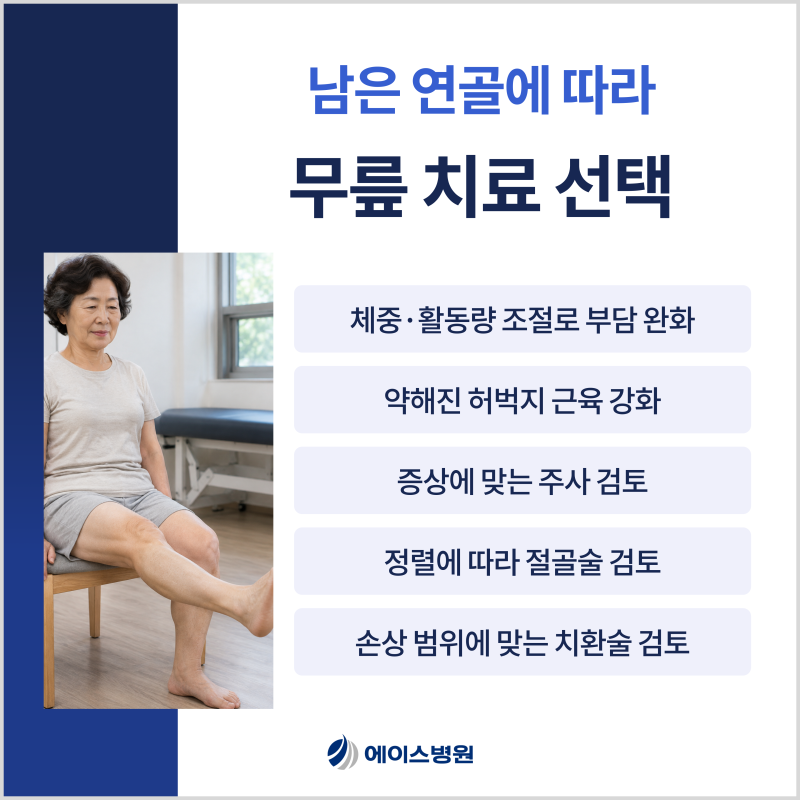
Non-surgical treatments considered first for knee osteoarthritis
Before surgery, treatment begins with reducing the stress placed on the knee. This includes managing body weight, reducing stair use, and strengthening the muscles at the front of the thigh. When these muscles support the knee well, it can reduce how much the joint wobbles.
· Anti-inflammatory injections help reduce inflammation and swelling
· Lubricating injections help the joint move smoothly
· Depending on the area of damage, autologous cell injections may also be considered
Once pain improves, the weakened muscles also need to be rebuilt. If you avoid using the knee because it hurts, the thigh muscles can weaken. This increases the load on the joint, and cartilage may wear down faster. That is why pain treatment and strength training are carried out together.
When is surgery considered, and which procedure is chosen?
If pain continues to make daily life difficult even after non-surgical treatment, we review the extent of joint damage and alignment to consider surgical options.
If the legs are bowed and pressure is concentrated on one side, an osteotomy, which corrects the angle of the bone, may be considered.
If only the medial or lateral side is worn, a partial knee replacement, which replaces only the damaged area, may be considered.
The most suitable procedure is decided by looking at the remaining cartilage and the alignment of the legs.

When joint replacement is needed, the surgeon performs the operation with the assistance of a robot. After preoperative imaging to check the shape of the knee, the placement of the implant is planned. The robot helps shape the bone within the planned range.
For those researching Sangnoksu Orthopedic Clinic, Ansan Ace Hospital performs surgery with the help of the CORI robot.

That said, even when a robot is used, rehabilitation after surgery is important.

Based on the stage of recovery, the range of knee bending and straightening and the distance walked are gradually increased. In particular, the first few weeks after surgery are a critical period for restoring joint movement.
The timing of surgery is decided by considering age, activity level, and work environment. Artificial joints have a limited lifespan, so surgery done too early may require revision surgery later. On the other hand, waiting too long can cause the legs to bow further and the muscles to weaken, which may slow recovery.
Being advised to have surgery does not mean you have to decide right away. It may simply mean you are approaching the point where surgery should be considered, so it is important to thoroughly check your current condition.

Before your visit, write down the movements your knee makes difficult
Note down the daily activities that have changed because of your knee, such as how far you can walk, using stairs, or pain that disrupts your sleep.
At Sangnoksu Orthopedic Clinic, this information is reviewed along with your previous treatment records and used to decide whether to continue treatment or consider surgery.
Thank you for reading this long article.
Sincerely, Ansan Ace Hospital



At Ace Hospital, which specializes in joints and spine, we encourage you to take a moment to check your body's health.
For more information on joints and spine, please watch related videos on the Ace Hospital YouTube channel.
▼▼ Link ▼▼
Frequently Asked Questions
How is knee osteoarthritis classified by stage?
Knee osteoarthritis is divided into early, middle, and late stages based on how much the cartilage has worn down. In the early stage, the knee feels achy after walking for a long time or going down stairs, but the pain subsides with rest. In the middle stage, pain persists even at rest and the knee may swell. In the late stage, pain occurs even when still and the legs begin to bow.
Does knee osteoarthritis start with non-surgical treatment?
Yes. Before surgery, treatment begins with reducing the stress placed on the knee. This includes managing body weight, reducing stair use, and strengthening the muscles at the front of the thigh. Anti-inflammatory injections may be used to reduce swelling, and lubricating injections can help the joint move. Depending on the area of damage, autologous cell injections may also be considered.
When should joint replacement surgery be considered?
Surgery is considered if pain continues to make daily life difficult even after non-surgical treatment. The extent of joint damage and limb alignment are checked. Even if surgery has been recommended, you do not need to decide right away.
What surgical options are available for knee osteoarthritis?
The choice among osteotomy, partial knee replacement, and joint replacement depends on limb alignment and the extent of cartilage damage. If the legs are bowed and pressure concentrates on one side, an osteotomy that corrects the angle of the bone may be considered. If only the medial or lateral side is worn, a partial knee replacement that replaces only that area may be considered.
How is the timing of surgery decided?
The timing is determined by considering age, activity level, and work environment. Operating too early may require revision surgery later because artificial joints have a limited lifespan. Waiting too long can cause the legs to bow further and the muscles to weaken, which may slow recovery.
Why is rehabilitation after surgery important?
Even when a robot is used, rehabilitation after surgery is essential. The range of knee bending and straightening and the distance walked are gradually increased according to the stage of recovery. In particular, the first few weeks after surgery are a critical period for restoring joint movement.