2026-11-28
Wadong Orthopedics: Osteoporosis Often Discovered Only After a Bone Fracture
Osteoporosis often has no symptoms until a bone breaks. Here's how Ace Hospital's Wadong Orthopedics spots warning signs, tests bone density, and treats spinal compression fractures.
Wadong Orthopedics: Osteoporosis Often Discovered Only After a Bone Fracture
Hello.
This is Ace Hospital in Ansan,
where 20 medical professionals work together.
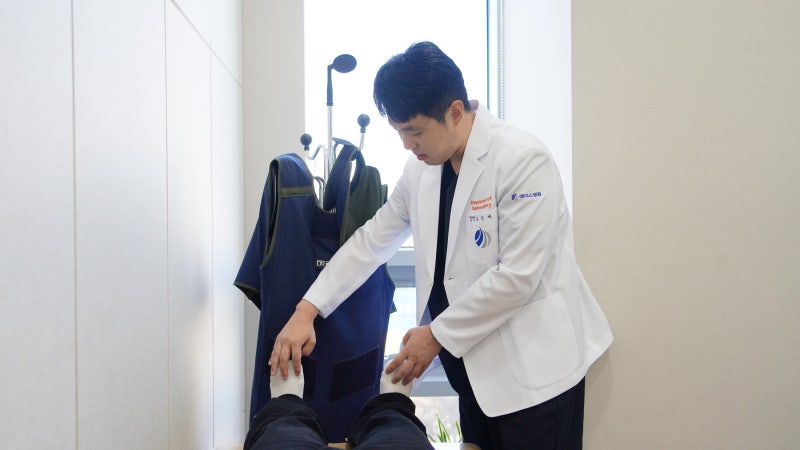
“My back hurts even though I didn’t fall.” “I’ve never been tested for osteoporosis.”
At Wadong Orthopedics,
we often see patients
who come in with back pain even though they have never been injured.
Even when bones weaken, there are often no clear symptoms,
so some people only find out after they have a fracture.
That is why we check bone health before a fracture occurs
by measuring bone density.
Here we explain the changes that occur when bones weaken,
how they are tested, and how fractures are treated afterward.
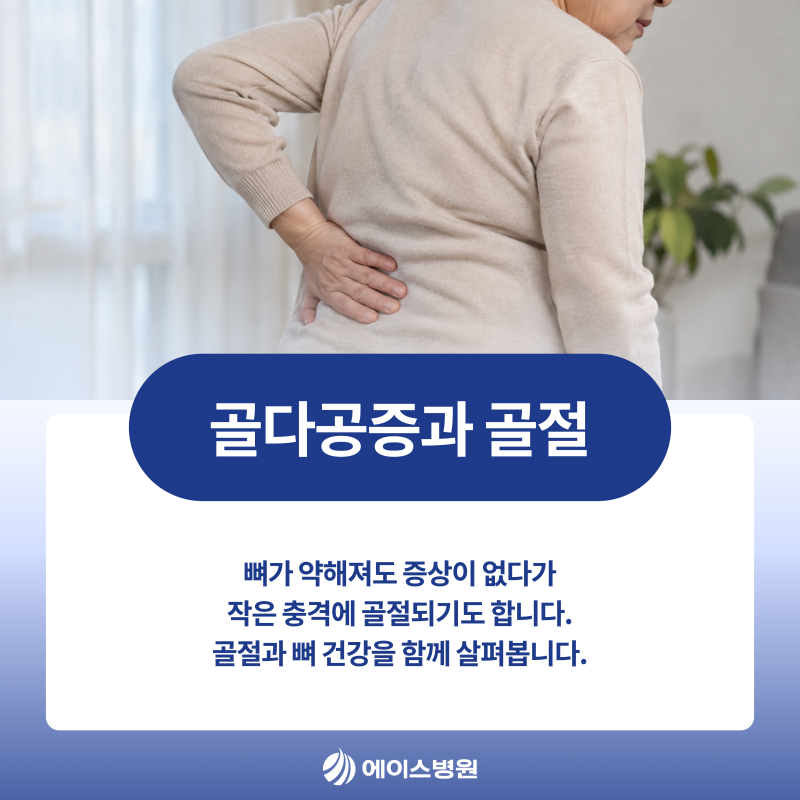
What changes occur when bones weaken?
When bones weaken, changes can appear
in your height or posture before any pain begins.

· When you have become shorter than before,
your spinal vertebrae may be gradually compressed,
lowering your overall height.
· When your back becomes rounded and your body hunches forward,
the front of the vertebrae may be compressed further,
leaving your upper body tilted forward.
· When a cough or sneeze sends a sharp pain through your back,
this kind of pain can also appear when a vertebra has already been compressed.
Weakened bones can collapse
under everyday stress, even without a fall.
Pain often begins after lifting something heavy
or after a minor fall onto the buttocks.
If the pain eases when you lie down
but gets worse when you stand up,
it is worth having your spine checked.
However, these changes alone
cannot show how much your bones have weakened.
At Wadong Orthopedics, we review changes in height and posture
and any history of falls before testing.
How are bone density and vertebral compression fractures checked?
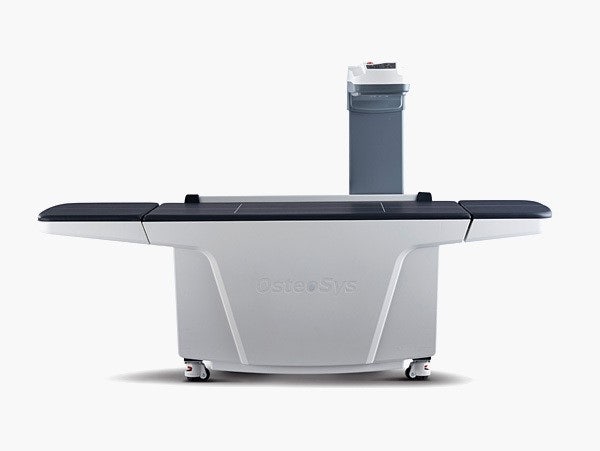
A bone density test measures the density of your bones
as a numerical value.
It is done while lying down and takes only a short time,
and the radiation dose is relatively low.
If any of the following apply to you,
we will review whether you need a test.
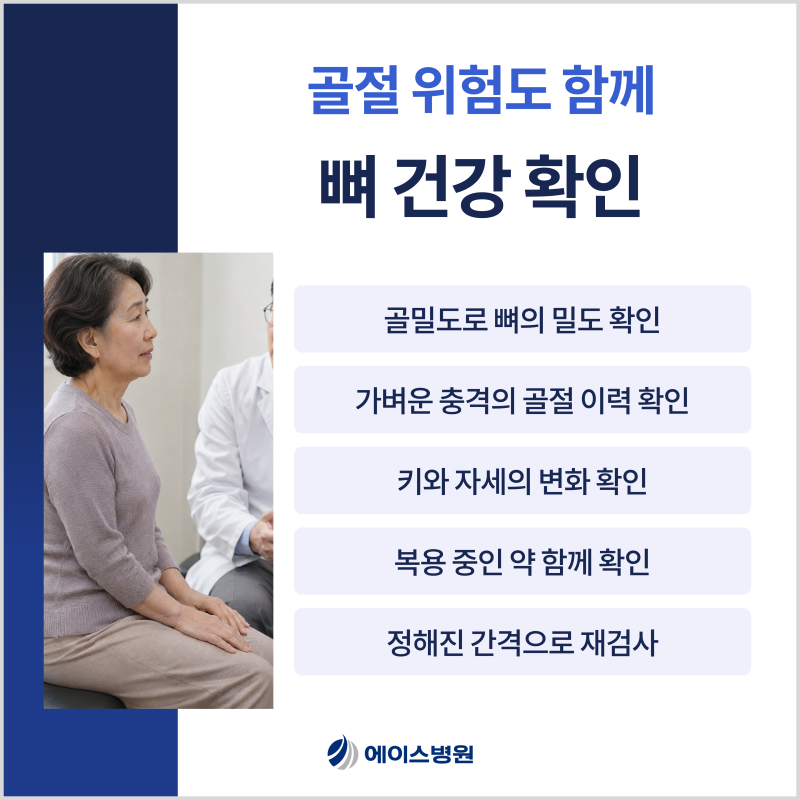
· Women after menopause and men aged 70 or older
· Noticeable loss of height
· A bone that broke after only a minor injury
· A family history of fractures
At Wadong Orthopedics,
we check your bone density score along with your risk of falling,
and the medications you are currently taking.
Even when scores are the same,
patients who have had a fracture
may have a different threshold for starting treatment.
After the test, we re-measure at set intervals
to track how your bone condition changes over time.
If a vertebra has already collapsed,
we check the shape of the compression on X-ray.
However, X-rays alone make it difficult
to tell when the fracture occurred.
A 3.0T MRI can show edema signals from a recent fracture,
which helps distinguish it from an older fracture.
A bone density test shows how weak the bones are,
while spinal imaging shows the condition of the fracture.
We look at both results together
to decide how to manage the pain
and build a plan to prevent further fractures.
How are compression fractures treated, and how can further fractures be prevented?
If the pain is tolerable,
we use a brace and medication
and monitor how you are progressing.
We take follow-up scans regularly
to check whether the vertebra is compressing further.
Lying in bed for long periods leads to muscle loss
and can cause complications,
so we encourage movement within what your pain allows.
We also set a schedule for wearing the brace
to keep the muscles from becoming too weak.
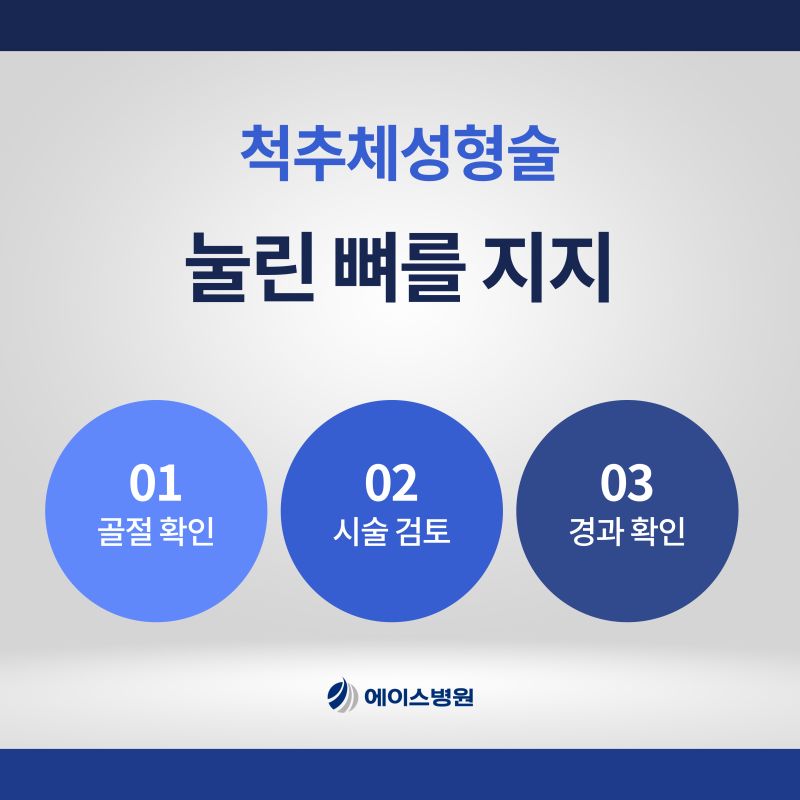
If the pain persists or the bone continues to compress,
we consider percutaneous vertebroplasty.
This procedure injects bone cement into the collapsed vertebra
to support the bone from the inside.
After the cement hardens and supports the bone,
we monitor changes in pain and posture.
However, this procedure alone
does not cure osteoporosis.

Patients who have had a fracture are at high risk of fracturing again,
so osteoporosis treatment must continue alongside.
We use medications, vitamin D, and calcium appropriately
and also review home environments where falls are likely.
Each osteoporosis medication has its own
method of administration and dosing interval.
Some medications require timing
to be coordinated with dental treatment,
so we first check which medications you are taking.
Strengthening the thigh and hip muscles
and doing balance exercises
can help prevent falls.
Practicing standing on one leg
is one way to work on balance.
At home, check for spots where you could slip,
such as doorway thresholds
or slippery bathroom floors.
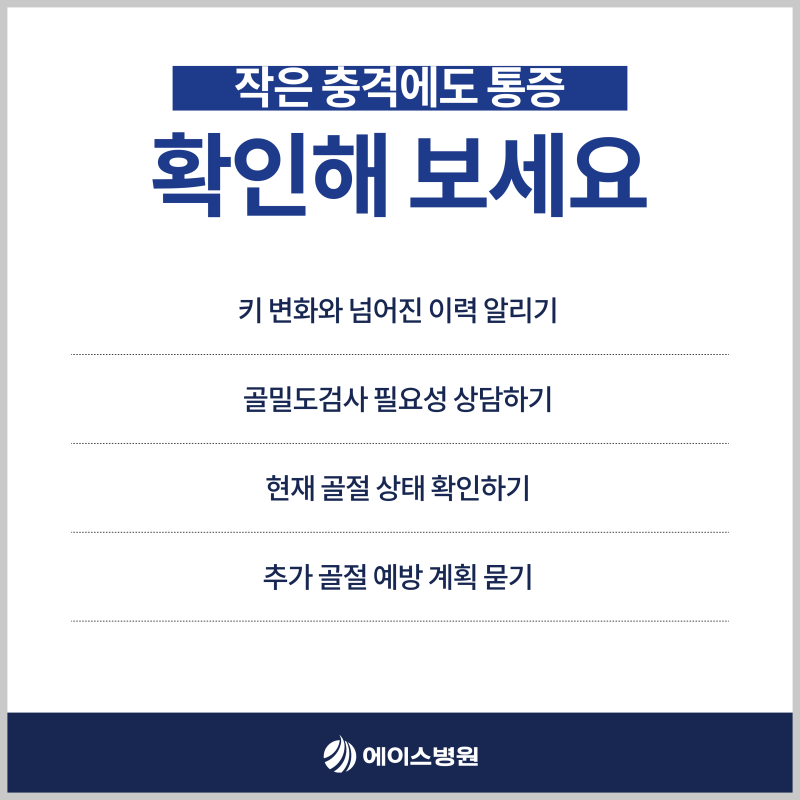
What to check after a fracture has healed
At Wadong Orthopedics,
we review your previous bone density test results,
your fracture history, and the medications you are currently taking.
Even after your fracture pain improves,
please confirm your next appointment
so that bone health care and fall prevention planning can continue.
Thank you for reading this long post.
Sincerely, Ace Hospital in Ansan.


At Ace Hospital, the place for joint and spine care,
we encourage you to take a moment
to check your overall health.
If you would like more information about joints and the spine,
please watch related videos
on the Ace Hospital YouTube channel.
▼▼ Link ▼▼
Frequently Asked Questions
Can osteoporosis go without symptoms?
Yes. Even when bones weaken, there may be no clear symptoms, so some people only learn about it after a fracture. Changes in posture, such as losing height or a rounding back, may appear before any pain develops.
If I have lost height, should I get a bone density test?
If you have noticeably lost height, we will review whether a bone density test is needed. We also review the need for testing in women after menopause, men aged 70 or older, people who have broken a bone from a minor injury, and those with a family history of fractures.
How is a bone density test performed?
It is done while lying down and takes only a short time. It measures bone density as a numerical value, and the radiation dose is relatively low. At Wadong Orthopedics, we check your fall risk and current medications along with your bone density score.
How are compression fractures treated?
If the pain is tolerable, we use a brace and medication and monitor progress. We take follow-up scans regularly to check that the vertebra is not compressing further, and if pain persists or the bone continues to compress, we consider percutaneous vertebroplasty.
What is percutaneous vertebroplasty?
It is a procedure in which bone cement is injected into a collapsed vertebra to support the bone from the inside. After the cement hardens and supports the bone, we monitor changes in pain and posture. However, this procedure alone does not cure osteoporosis.
How can refractures be prevented after a fracture?
It is important to keep up osteoporosis treatment while reducing the risk of falls. After a fracture, the risk of another one is high, so we use medications, vitamin D, and calcium appropriately and check for fall hazards such as doorway thresholds. Strengthening the thigh and hip muscles and doing balance exercises also help prevent falls.